

For British Jews, October 4 used to be remembered as a moment of extraordinary solidarity with the left.
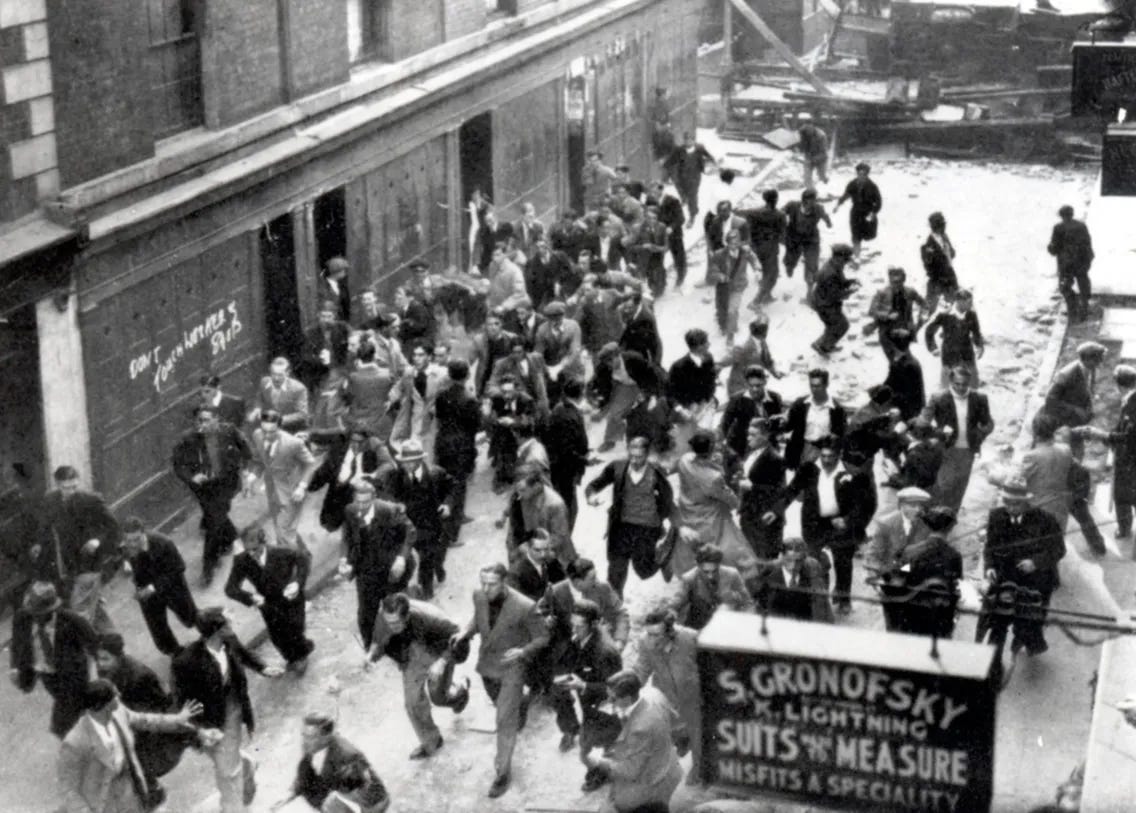
Exactly 90 years ago, tens of thousands of Jews, socialists, communists, trade unionists, Irish dockers and other East Enders stood together to stop Sir Oswald Mosley’s British Union of Fascists — the notorious Blackshirts — from marching through the heavily Jewish East End. Barricades went up across Cable Street; residents hurled whatever they could find from windows, while children famously rolled marbles under the hooves of police horses trying to clear a path for the fascist march. Mosley’s Blackshirts did not pass.
Today, however, it’s clear that this alliance no longer exists, and that there is a shrinking place for Jews on the British left.
On the very same day as the 90th anniversary, the Green Party of England and Wales formally adopted a motion declaring that Zionism should be “treated as any other form of racism” and backing a single Palestinian state in place of Israel. Perhaps even more tellingly, members rejected an amendment intended to protect party members from pressure or disciplinary action simply because of their affiliation with ‘Zionist’ communal institutions.
That leaves the small number of Jewish Zionist Greens facing an obvious question: could belonging to Zionist institutions, which include much of mainstream British Jewish communal and synagogue life, now put them at odds with their own party?
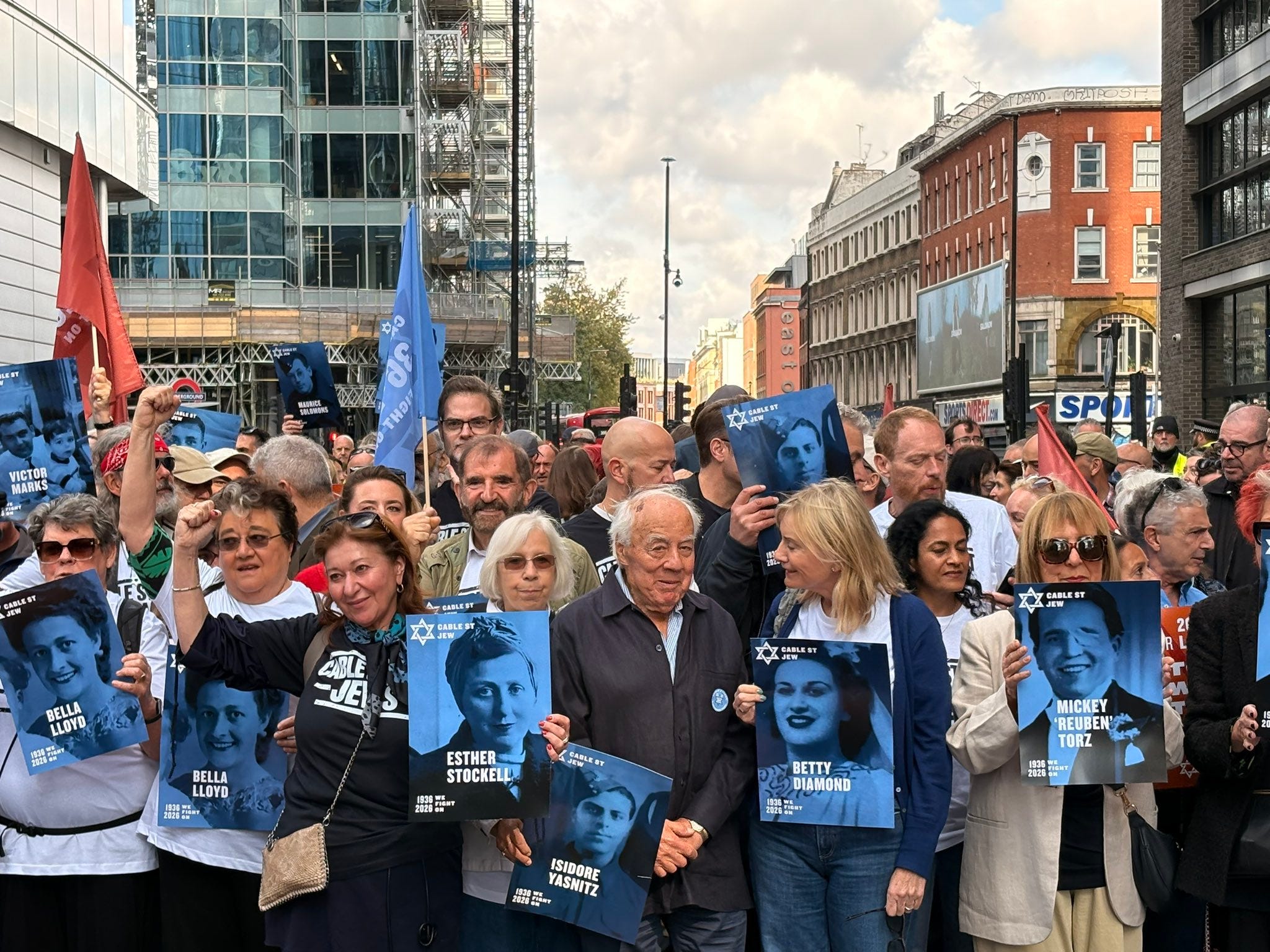
Meanwhile, on the same sunny Sunday, around 500 Jews found themselves marching separately from the union-led commemoration of the Battle of Cable Street. Many carried photographs of grandparents and relatives who had fought the fascists, as cheerful Yiddish music played through the streets.
They were not welcome at the main rally. There, it seemed, only the “right type” of Jews were welcome — those marching with Jewish Bloc for Palestine. Eve Kay, one of the organisers of the alternative Jewish march, told me that they had been warned they could face violence if they dared to join the main demonstration.
And indeed, on the very streets where Jews once stood against fascists targeting their community, protesters at the main march chanted “Zionists are not welcome here” and “Zionism is fascism”. Any Jews who were identified as ‘Zionist’ by the mob were pushed, shouted at and cursed.
The sense of exclusion began long before the march itself. Unite, one of the main organisers of the commemoration, initially announced the event without involving any mainstream Jewish organisation in its planning, and early publicity largely framed Cable Street as a broader working-class anti-fascist struggle rather than centring the Jewish community that Mosley’s Blackshirts had specifically targeted. The original anniversary event was also initially scheduled for a Saturday.
Similar stories by Florit:
It was against this backdrop that I joined the separate, proudly Jewish bloc for my coverage of the Battle of Cable Street anniversary for The Times of Israel. Among the people I interviewed was Michael Bennett, who was just four years old in 1936 and watched the Battle of Cable Street from his father’s shoulders.
“What I hope will happen is that today’s march will make not only my grandchildren, but all the other grandchildren, wake up and say to themselves that we have to be proactive against antisemitism,” he told me. “Because if we don’t, frankly, I don’t know how long a future the Jewish people will have in this country.”
Ninety years later, October 4 means something very different for British Jews.
The racism has changed its language. But this time, too many people on the British left are speaking it fluently, leaving Jews to march through it alone.
Well said, well written. And thank you. We must all, right thinking people in Britain, stand with our Jewish neighbours and friends. Forever.
Time to start planning exit strategies, I fear.